
First time on my blog "Hide IP Soft?" Want to know more about Hide IP Soft? Need some fresh software to hide your IP?

Subscribe to blog updates by Email or RSS

Each week you will get a new post with a new Hide IP Soft. I promise you, my dear reader! Or you will unsubscribe :-)

Firstly, look at my Hide IP Soft Big List. You will like it.


Wednesday, February 13, 2013

The “Voice of America” shows a prohibited movie in Iran

Washington- The movie called Rhino Season that won the prize for Best Cinematography at San Sebastian Film Festival, 2012, the prize went to the Iranian director of photography of Kurdish origin , Touraj Aslani was shown in Iran by “Voice of America” satellite TV on Friday. This film also can be seen in the Internet.
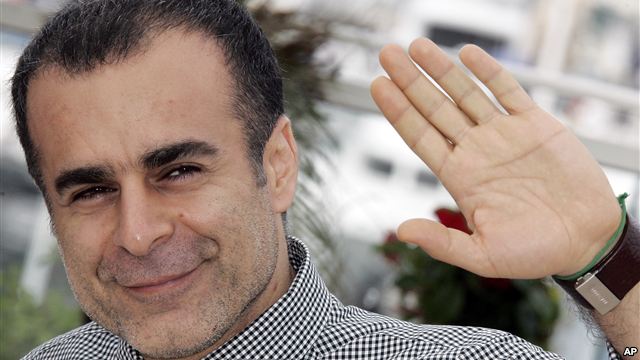

Bahman Ghobadi
Gobadi emphasized the necessity of showing the movie via “Voice of America” satellite TV because of the censorship in Iran and that Iranian audience do not have any other possibility to see it.

The movie is based on a story from real-life events of the Kurdish poet Sahel from Iran , who was being imprisoned during the 1979 Iranian revolution.

The movie tells about the events beginning with the late 70-ies of the Islamic Revolution to the present day. This movie is about politics, love, and how Sahel (the main character) is looking for his wife and children.after years spent in prison.

Film director Bahman Ghobadi, who gives his rights to broadcast the movie to "Voice of America", said that his film is a "lyrical picture, that shows events that happened with Kurdish poet, whose family considered him died in the prison." The film became the first work of Iranian-Kurdish director after his emigration from Iran in 2009.
Liked this post? Why not to Subscribe to Hide IP Soft by Email for FREE

Friday, February 8, 2013

60% of Russians in Israel think they do not need Internet censorship. The results of opinion poll

The NEWSru.co.il finished its public opinion poll that was devoted to the International Day of the Free Internet. The poll that had been carried out during one day from February 5 to 6, it includes 1.063 respondent(920 answered on all 14 questions).

The results:
The carried out poll shows: the majority of our readers(that is 86%) are agree that is necessary to explain children what threats has the Internet.

Our readers suppose that a child should be isolated from 1) drug advertisement (82.3%) 2) pornography (78.7%), 3) scenes of violence (77.2%), 4) extremism propaganda (74.3%), 5) communications with unknown people (69.3%), alcohol adv. ( 69%) tobacco adv. (68,5%), religious propaganda (60%). Less than 50% of the audience support other restrictions.

The majority of readers who have children or grand children discussed threats, that Internet can bring. But only a half of them limited the " computer time" for under-aged.

Participants of the poll generally visit news and educational sites (97,3%), search sites 84,7%), educational sites (78,7%), social networks (61,5%), online dictionaries (57,5%). Other categories of sites are visited by at least 50% of the audience. So, for example, less than 35% said they visited erotic sites.

Along with, our readers think that their under-aged children or grand-children visit firstly gaming and entertainment sites, and social networking sites, search engines and educational websites. Only 4% of questioned said that their children or grand-children are viewing erotic sites.

The most popular among the participants of the poll became such sites as Google (91,9%), YouTube (86,1%), Wikipedia (69,8%), Facebook (54,4%) и Odnoklassniki (52,2%).

The most popular among children according to participants of the poll became: YouTube (37%), Google (34,2%) и Facebook (32,2%).

More than 92% that their home computers has the antivirus systems. Almost 86% from those whose under-aged children or grand-children has a computer said that such a program is set up on their “child” computers.

Less then 14% use access to the unwanted content “filter. And a little more than 23% of those with under-aged children or grandchildren who have a computer, said that this filter is set up on "children’s" computers.

14% of questioned think that it is necessary to limit the success for under-aged to the information , 36% has the opposite opinion. Others were not ready to clearly define their position.

More than 20% are for Internet censorship. But 60% are sure that ensorship in the Internet shouldn’t be introduced.

Liked this post? Why not to Subscribe to Hide IP Soft by Email for FREE

Thursday, January 31, 2013

The cyber crimes are taken by a diplomatic approach


The informational security department is creating in the Ministry of foreign affairs

The authorities of Russian Federation took seriously the questions of international information security. As it became known the Ministry of foreign affairs will have the special department that will supervise this issues soon. Its main goal will be concern with the promotion of Russian initiatives for the introduction of the Internet policy and strengthening of the trust measures in cyberspace. The new structure also will inform the department’ leaders about how the oversees countries take the Internet question, including the freedom of its usage.

The Internet and the informational security questions became the most priority ones for the Moscow internal and external policies. We remind that on November 1, 2012 the amendment to the “Child security from the harm information” act according to which the Federal Service for Supervision in the Sphere of Telecom, Information Technologies and Mass Communications (ROSKOMNADZOR) got a right to block sites with a child pornography, drug’s advertisements and suicides without court decisions came into a force. And this week the president of Russian Federation Vladimir Putin charged Federal Security Service with developing of the state system for prognosis and prevention of cyberattacks. He also permit them to fight with crimes in the informational space. It is expected that the unite Internet law will be accepted in spring.
Moscow began the work of the international informational security in 2011that is coming with a number of big initiatives for excepting Internet policy under the UNO. A year before in the Ministry of foreign affair appeared a new position called a special moderator of informational and communication technologies issues in politics.

But now as it became known the foreign office will also include a special department for international and communication security issues under the department of a new threats and challenges”.

According to “Kommersant” the key aims of the new structure include the advancement of prepared concepts of the UNO convention for “international information security providing” and a made by the Shanghai Cooperation Organisation “Internet policy” act; defending of the Russian approaches to Internet governance management on the international arena (and first of all the recognition of this sphere includes principles of sovereignty and non-interference into the domestic affairs of a countries).

The USA State Department has such a bureau since 2011. The head of this bureau is the federal agent Christopher Painter who announced the cybercrimes as an “ imperative of the external policy”. Не and his colleagues are wary about Russian initiatives in this sphere and see them only as an approach to straighten the state control and Internet censorship.

Liked this post? Why not to Subscribe to Hide IP Soft by Email for FREE

Thursday, January 24, 2013

Freedom decreasing

Mother’s and country's care are similar in some points: you are not hungry, have clothes to wear and feel yourself secured...

But there are “Do not watch TV more than 1 hour a day”, “You shouldn’t read these magazines” and of course “Don’t dare to argue with mother”!

What we mean talking that the state cares about us? Firstly we surely mean free public health and education, good pension and easy and convenient intercommunication between citizen and a state structure without bureaucracy etc.

However nobody think of censorship as an identifier of the country’s care.


Caring country cares for every sphere of life including social and moral. Even from the childhood the future citizen is protected from any king of corrupting influence of dissidence - from ideas that run counter to state policy. The press shouldn't has any articles criticized the current power.

The progress goes further. The humanity has the Internet and this is a good ground for dissents and that is why it should be regulated.

The first country was China with it’s “ Great Fire Wall” that like a Great China Wall secured its citizens from the bad influence of other countries and at the same time it protected the ruling Party from rebellions and mutinies.

A bad example is catching, so Turkey has some bad news. Tens thousands of people rushed to the streets opposing Internet censorship. It was not hard to understand their fear and worries because from May 15, 2012 the free Internet stopped it’s existence. There were introduces 4 filters which blocked the access to several sites. The list of this sites is unknown. Besides there are prohibited words for searching in the Internet, they are for example: «girl», «partner», «animal». It is hard to imagine about what authorities thought making this list.

So, the question is what we will do if we have the same problem. Of course, the censorship in a moderate dose is useful, but where is the limit?

Liked this post? Why not to Subscribe to Hide IP Soft by Email for FREE

Sunday, January 20, 2013

Protests in Manchester were devoted to web censorship rules

Great number of demonstrations have been performed in Manchester against the mistrusted Anti-Counterfeiting Trade Agreement.


Dozens of activists from Anonymous, Occupy Manchester and some other groups turned up at Piccadily Gardens, the others from their legions made active protests which took place in front of the Dianetics Centre. There were many anti – ACTA events, others made active demonstrations all over the world. For example in London one may see 200 protesters.

ACTA is being regarded by the opponents as some kind of measure that is designed to allow film studios company consortia trying to gain control over the Internet that is being taken as impossible form to be capitalized on.

Supporters of this type of web censorship declarations do claim about the fact that there is too much copyright infringements. A big number of governments are pressured by the American for signing the agreement - though Germany, Poland, Slovenia, many others realize legislation’s that are wider implications of web censorship and freedom of speech.


Liked this post? Why not to Subscribe to Hide IP Soft by Email for FREE

Friday, January 18, 2013

Almost the half of Russians support Internet censorship

Almost the half of Russian citizens are not against information’ limitation in the Internet without a court decision and are satisfied with the work of prohibited sites’ register, argues a “Public opinion” fund’ poll. The prohibited sites’ register started its work in the beginning of November, 2012 within the “Protection Of Children From Harmful Information” law. The list includes sites with a child pornography, suicide propaganda, drugs etc.


The public opinion poll was carried out among 1,5 thousand of Russians in 43 regions. 54% of citizens and 77% of active Internet users knew about the register In the begging of December, 2012. Among those who knew about it 47% of respondent Internet users were for its introduction. 43% of Russians and 44% of active Internet users are not against from out-of-court decisions to block some information, but 23% of people in Russia and 29% of Net users support court decisions. Censorship opponents are in the minority. They are 14% wholly among Russians and 15% among Internet users.

According to a Protection Of Children From Harmful Information law 41% of Net users are ready to complaint to Russian Federal Surveillance Service for Mass Media and Communications ( Roscomnadzor) about a prohibited content. According to Aleksandr Oslon the head of the POF, “public opinion always will be on the side of those who struggle for the cleanness even if it connected with the Internet”. As he says it is not normal to protest against censorship, and those who woll say that the black list limits his freedom will face with a misunderstanding of others at least until limitations goes over the reasonable line.

The expert Aleksandr Demidov said that “the order of the country is more important for citizens then a freedom and people will continue to support such kinds of limitations in the Internet”.


Liked this post? Why not to Subscribe to Hide IP Soft by Email for FREE

Monday, January 14, 2013

The Pirate Party had been refused in registration

Department of Justice refused to register the Russian Pirate Party as it was reported on the party’s site. The minister found several violations in presented by the activists documents, but the special attention was paid for the name of the organization.


In the minister of justice’ notification is said that the party can’t be called “Pirate”, because piracy in Russia is a criminal offence. Also the document include detailed quotation of the criminal code and the United Nations convention of the maritime law in which the notion of the word “piracy” means maritime banditry. “The piracy is closely connected with a confrontation”, - as it was stated in the notification.

Besides, it was mentioned in the document that “secret vote promotion of the candidate of the presidential elections of the Russian Federation do not correspondent to the name of the party”. Also the minister pointed out a number of violations in presented documents. Activists reasonable rejected all the complaints of the department.

Pavel Rassudov, The president of the party said that he will dispute the Ministy of Ajustmen’ denial. “We think that the Prosecutor General's Office must to carry out a conformance testing of the correspondence of names of “ Yedinaya Rossiya”(The United Russia) because there is no mentioning of unity and also the “Yabloko” party ( Apple Party) in the aims of which there is nothing about fruits etc., he said.

“Aims of the Pirate Party are understandable for a long time and are well- known for the society. Even the court of Italy had been decided this question. Even a thought about the drive for freedom and civil law is compared with the piracy is an absurd or a wrong interpretation”, - commented the Minister Rick Falkvinge , the founder of the piracy movement and the first Piracy Party of Sweden. I think your bureaucrats have a broccoli in their socks”.

In November about 50 people took part in a rally against Internet censorship under the Pirate Party near the memorial of the Carl Marks on the Revolution square. It was disgusting. Despite the rally was coordinate with the Russian Communist Workers' Party the policy didn’t allow unrolling the flags”, said Rassudov. Earlier Moscow authorities refused Pirate Party in caring out a picket for Lurkmore and for freedom. Rassudov also remind that in Autumn when the law of the Internet censorship was admitting Pirates had already organize a rally and warn about the not guilty sites will be blocked. Also in March 2011 The Pirate Party were trying to be registered but the Ministry of Adjustment refused to give a certificate of registry because of the name.


Liked this post? Why not to Subscribe to Hide IP Soft by Email for FREE

Sunday, January 13, 2013

The Roscomnadzor stopped receiving appeals on blocked Adagamov’s site reposting

Federal Service for Supervision in the Sphere of Telecom, Information Technologies and Mass Communications (Roscomnadzor) announced the finishing of appeals’ for reposts of prohibited site of Rustem Adagamov, a popular bloger receiving.
Two days earlier LiveJournal have blocked the access to an Adagamov’s note (in the drugoi Net) devoting to the self-immolation act in India. Roscomnadzor decided such a note as a suicide propaganda. However blogers find features of a censorship in their decision.

The protest act began in LiveJournal. The deleted note was saved by 100 of popular blogers and Aleksey Navalnyi also.

Of course some time later Roscomnadzor began to receive a lot of appeals on everyone who reposted this note. It seems that the number of appeals reached a critical level because at Friday afternoon Maksim Ksenzov, the deputy head of the Roscomnadzor wrote in his Twitter the following:

“The announcement: in connection with the blocking of the Adagamov’s site URL http://zapret-info.gov.ru there were received to many links with the repetitive content. Also there was a claim on Navalnyi’ blog. They will not be considered. I repeat – WILL NOT”.

According to Aleksandr Plyushev’s words (journalist) the Roscomnadzor answer is not only bloger’s win in the concrete case . “It means only the fact that the Internet censorship is unable to work.


Liked this post? Why not to Subscribe to Hide IP Soft by Email for FREE

Friday, January 11, 2013

The head of the Kostanaysk region threaten to “smash a mug” of a ng.kz user for an offensive comment

On the hardware meeting Nuraly Saduakasov, the head of the Kostanaysk region sharply criticized comments of several users on the weekly newspaper “Nasha gazeta” forum. He announces that the newspaper should excuse for admitting of such situation. Otherwise it has a risk to not be allowed to attend such meetings of the heads of regions, reports “Nasha gazeta”.

It was discussed on the meeting completed on January, 5 ski race among cities and regions. The reason for such anger was the user’s named “Seryi wolk” comment, who openly expressed his opinion about, to put it mildly “nonsport” appearance of the regional heads and wholly “inexpediency” of such a competition.
To be honest the expressions were not tactical and have an offensive character and a few times later had been deleted. Several journalists and meeting members participated in this discussion. The comments were full of emotions. This is the prehistory that became the reason of the head’s anger and his sharp and rude statement, according to the “Nasha gazeta”.

Of course, it is understandable that such comments are very offensive for a person who carried out this competition among officials. The threat to “smash a user’s mug” and an abusive hint for the newspaper office pays for such comments and expressions. But why the official does not take a legal action for a protection of his and his colleagues’ honor and dignity and instead resort.

At the same time the representatives of several organizations in spite of any riles and norms ask the reduction of the edition to give the IP address of the “guilty” user. The newspaper and content and its users and readers are different things. This is their own decision to leave bad or good comments.

“Internet helps people to shorten the destination between them and the power and to express their opinion with the minimum level of censorship. The next time we will try to notice that officials were called by improper words beforehand and will eliminate these epithets. But we will never prevent civil society from expressing their views also concerning the officials’ activities even if it will complicate our cooperation in future. The press that works not under the government will never be a “humble servant”. And that is not because we are some kind of special ones. Moreover it will never be a partner of the power due to different aims. But the Mass Media and the power can successfully cooperate and respect each aims. We are for such collaboration”, - writes Olga Kolokolova, the chief editor of the “Nasha Gazeta”.


Liked this post? Why not to Subscribe to Hide IP Soft by Email for FREE

Thursday, January 10, 2013

Censorship in the Internet. “For” and “ Against”

A new bill that limits the access to a harmful Internet resources caused a sharp public discussions. The main question is “How to balance between  the Freedom of the Internet and the security from a dangerous information?” 

Nobody is dispute with the fact that the Freedom of the Internet is a necessary thing. And certainly it is right to fight with a child pornography and drug addiction. According to Dmitri Medvedev words this points are compatible: “ The first. The common principle: the Net should be free. The second: It should follow a number of rules. The third. Basic human rights and fundamental freedoms including the information right from the one hand and the right for security from a harmful content must be obied. 


The new law is supported by the fighters with the  paedophilia. According to Denis Davidov, the chief executive of  The League of Secure Internet, this can help to fight with the crimes towards child: “We support this bill, because the situation with child pornography and paedophilia is very critical. If this bill is not accepted, we will always hear something like “ The police should firstly find the offenders and only after it we have a right to block this site. This is not right. Firstly the access to this site should be blocked for citizens  and then police can search for offender with no worry”. “From the other hand this law can eliminate the Internet freedom” - thinks Ivan Zasurskyi, the director of the Online Publishers Association. “This law wholly changes the Russian Internet. We lived in a free country with a free Internet. We didn’t have any mechanism that allows to block sites without in a moment. But now it’ll appear”.

Many experts pay attention on a technical imperfection of the bill.  Ochir Mandjiev, the Yandex spokesman think that new limitations can harm  right-minded citizens right-minded citizens. If such a content were found on the page of any user, the access to a whole server will be blocked. Blocking one of the segment can lead to blocking of the the whole good resource. Users are afraid, because just if you left a reference to a “ Suicides club” or any site with a ways of how to make a drug the resource will be deleted.   


Liked this post? Why not to Subscribe to Hide IP Soft by Email for FREE

Wednesday, January 9, 2013

Google stopped to notify Chinese users about censorship

According to Great Fire information, Google Company turns off its search notice of state censorship in Chinese segment. Nowadays Internet- Giant and local authorities desist from any official comments.


Frictions between Google and Chinese authorities began in 2009. Since that time users’ retrieval requests are carefully filtered by the “Great Chinese Firewall”. It is aimed at moral and cultural health of a nation.

Nevertheless, later some vulnerability that is able to easily avoid limitations had been discovered. In connection with this Google had to inform users by the message about censorship.


Liked this post? Why not to Subscribe to Hide IP Soft by Email for FREE

“Lurkmore” site deleted one more article by the Roscomnadzor request


The online encyclopedia Lurkmore deleted an article about suicide by the pressing request of the ROSCOMNADZOR.

We remained that on January, 6 the heads of the Lurkmore got a report in which it was said that the article address, which includes some way to commit a suicide in a comic form, is in the blacklist now.


The portal heads decided to submit this request and delete this article. Sometime later the Lurkmore representative explained what was the matter on Twitter.


“It seems like a Jesuitical law: we have to delete materials through gritted teeth otherwise they will delete everything. This is censorship absolutely”- wrote heads of the portal.

And also this is not for the first time when this site appears in the blacklist. In November, the site was in the list because articles called “Pipe” and “Hemp. Direction for use”, which the State drug enforcement agencies (SDEA) categorized as a “drug promotion”. These articles were deleted.


Liked this post? Why not to Subscribe to Hide IP Soft by Email for FREE

Sunday, December 30, 2012

Born to be free

Today the free and even common for the whole world Internet is going to be separated on two parts. Experts afraid of the begginig the digital cold war and call for coming to a compromis. But developed countries see a danger of UNO will legalize Internet control. The World Wide Web in this way will be separated into numerous national networks. 


There are even an example of such separation ^ China, Saudi Arabia, Iran. In China there is practically no any access to Livejournal, Facebook, YouTube and Twitter. In Iran the YouTube had been blocked since 2009. This happened after mass protests, caused by reelection of Muhammad Ahmandinejada.

Users in Iran do not have access to Facebook and Twitter and also a wide range of popular sites, that are accused of being pornographic or offensive for Islam. It is considered that such sites are threaten national security.


Not so long ago, by the order of Iranian lieder ayatollah Alo Hamenei was formed an In supervision agency - a virtual space Supreme Council. It includes such high officials as a Minister of Information and culture, chiefs of the police and IRGC (Army of the Guardians of the Islamic Revolution). In 2010 IRGC formed a special department to struggle with the “ destructive” nets and several thousand of Iranian citizens who violate the Internet law were arrested.At that time it was created a national Internet, practically wholly independent from the WWW. For example Mehr. It is a site that is going to be the YouTube competitor for Iranian speaing people.

Iranian user found a way to avoid prohibitions with a help of special programmes by imitating the computer location in another country. Of course it is illegal to distribute such a programme in Iran.
The access to such a social networks and news sites is blocked practically in all totalitarian countries, for example in Turkmenistan.

Russia also is speaking about a “logical” Internet regulation/ It was offered to prohibit anonymous registration. The attempts to censor Internet is officially explained as the fight with the terrorism and child pornography. Also it is discussing the amendments into a bill about connections and information, that will allow to block different Net resources.

A Western world also is moving slowly but surely towards the Internet control. In May, 2011 in Dovil was accepted the declaration G8 that supports intellectual property rights (IPR) security measures. Such bill as “ Secure Intellectual Property Rights” or “ Stop Piracy” , that will began the Internet censorship are considering in the USA. The Google creator Sergey Brin is sure that the threat to a free Unternet is coming not only from China and Iran, but also from Apple and Facebook, who by data sharing limits divide Internet among each other.


Maybe soon there will only several zones of a free Internet. The introduction of the approved network censorship under the UNO is a scary tale that can become a true story.

Liked this post? Why not to Subscribe to Hide IP Soft by Email for FREE

Saturday, December 29, 2012

The fight measures against Government Supervision will be discussed at hackers congress

Right protectors and experts do not like the authority’s plans.

According to international Mass Media, the 29th Congress that comes under the aegis of the Chaos Computer Club (CCC) was opened in Hamburg”. The congress is the biggest official hacker’s organization in the Europe. Its main aim is to achieve the availability of any information, besides a private one.


An opening speech was made by Jacob Appelbaum, the hacker from the USA. He told about the US plans concerning the creation of measures to develop the global Internet tracking system and called to fight this expectancies.

He also reminded about the Special Computer Center construction in Utah. The work of this center will include the control of the World Wide Web by the secret service. “Authorities want to watch everybody” he said. “Such attack toward a human dignity” according to Appelbaum’s words “ will straighten the democratic principles”.

The congress will include discussions not only about new technologies, system and security. More than 90 reports will be about the creation of the Net philosophy, the security of the intellectual property in the Internet and the possibilities of censorship overcoming.


Liked this post? Why not to Subscribe to Hide IP Soft by Email for FREE

Thursday, December 27, 2012

In China the Internet access will be allowed only after stating the passport data

The China’s National People's Congress will consider the law according to which Internet Users will have to state their passport data to get an access to a wired and mobile Internet connection on this week

However this law caused a fear of straightening the Internet censorship. The access to such popular websites as Facebook, Twitter, YouTube, Flickr, Live.com, WordPress and Blogge are blocked.

Nevertheless despite prohibitions many Chinese people avoid this blocking with the help special services.

According to the “Reporters without borders”, China is included into a “top ten Internet countries-enemies”. If any Internet-company refuse to cooperate with the government or violate the rule it will be blocked, writes Kursweb.Ru


Liked this post? Why not to Subscribe to Hide IP Soft by Email for FREE

Wednesday, December 26, 2012

Russian Federal Surveillance Service for Mass Media and Communications ( Roscomnadzor) will pay for extremists catching

The Roscomnadzor announced the competition on a conclusion of a monitoring Media contract. Its aim is to reveal, to fix and to give a first expert-analytical estimation of materials containing features of the violation of current law of Russian Federation, extremists materials and another illegal content. It was written by the “Izvestia”.


Such competitions are held annually by the Roscomnadzor since 2009. However a technical issue of this competition started to include new points this year: revealing information injures the health and development of children, Media and Internet monitoring with the help of the automotive programme.

The Russian Federal Surveillance Service for Mass Media and Communications ( Roscomnadzor) will give results of the competition in the end of the January and a contract concluded due to the results of this competition will be in force till December 31, 2013. The maximum contract price is 35 million of rubles. In the last year competition won a state company “Informregister”, the contract cost 12 million of rubles with this company was the only pretender.

The purpose of a work within the contract is a monitoring of the meeting the law requirements by the Media to not allow abusing the freedom of a mass information.

The information that the executor will reveal includes: materials, containing public calls to realize terrorist activity or any information justifying terrorism; content that is calling to violence methods aimed at changes of the foundations of the constitutional system, exciting an ethnic, racial and religious strives. Besides it includes publications about the public and knowingly false accusations of state authorities of extremists actions etc.

One more new task is a systematic monitoring. The winner will monitor nearly 2000 different additions a month, it will include also 40 online versions of certain newspapers.  

Despite, the work includes some points about Media monitoring. This contract does not imply the operator of the Internet resources register that contains the information that injures child, explained Vladimir Pikov, the representative of the Roscomnadzor.

- The register includes not only Media but also the Internet  materials that are not included in the Mass Media Information. At present time we are kipping the register and we do it quite well. The competition does not include the company-register operator, noted Pikov.

Sergey Moiseev, the president of the the Guild of Press Publishers (GIPP) also think that Media monitoring is not something terrible: it is necessary to monitor Media. “ I do not consider monitoring as a censorship”.


The question is “ How the results will be used. Permissiveness and democracy are different things, especially if the matter is about extremism and international relationship”, - said Moiseev.


Liked this post? Why not to Subscribe to Hide IP Soft by Email for FREE

Friday, December 14, 2012

Russia and China submitted to UNO an offer to tighten up the Internet control. USA accused Russia in authoritarianism.

Russia, China and a number of other countries have submitted to ITU an offer to tighten up the international Internet control, to deprive American companies of monopoly on IP addresses and domains.

The matter is to allow ONU countries to distribute and remove registered IP addresses and domain names.


At recent time the main Internet regulators are several American non-government organizations, they are IETF, W3C and ICANN.

According to “Vzglyad.ru” the USA and Google in response accused Russia of authoritarianism. Also UK, Canada. Australia and a number of Europe countries are against this initiative. Particularly, Moscow was accused of introduction of censorship. A member of State Duma of Information Policy and Technologies Robert Shlegel explained that Internet Censorship and the Internet and domain delegation governance are different things.

“Disputes about Internet censorship are very funny, because every country has an opportunity to limit Network access by the Parliament or executive power decision. If you, for example offer an Internet service you can block the access to certain resources, and you can a lot of other things, but it doesn’t refer to domain delegation” - he said.

We remind that on December 3 in Dubai on the ITU conference Russia submitted a number of offers according internationalization of Internet, that caused a sharp criticism from USA, EU and Google.

Liked this post? Why not to Subscribe to Hide IP Soft by Email for FREE

Wednesday, December 12, 2012

Internet censorship in Central Asia

It is hard to find a site that will irritates politicians of a Central Asia more than Fergana.ru. Working abroad Fergana reports such themes that local Media is not able. This reports concerns everything from Uzbekistan president corruption system to nationalistic ideas of the lieder of the “ Ata-Jurt” party in Kyrgyzstan and tortures in Tajikistan jails.


Just for this reason the Fergana site is blocked in 4 countries:  Uzbekistan, Tajikistan, Kyrgyzstan and Turkmenistan. According to the chief editor Diniil Kislov point of view the aim of the government is to block the access to the Internet resource proves that “ Fergana” publishes a truth.

Daniil Kislov tells how Fergana became one of the leading informational resources in Central Asia in the interview with the “ Voice of America”.

Erica Marat: How popular are you in Central Asia, where Fergana is officially prohibited?

Daniil Kislov: Despite the fact that our site is blocked  the audience is big because nowadays due to the Internet options and even if you’re not a specialist it is easy to avoid a site’s blocking. It is a pity that government authorities of the Central Asia countries do not understand that it is practically impossible to block smth in The Internet.

A number of people who read our site through the proksi - servers or other programs is a half of all our readers.  

We always give our readers the alternative ways to get access to our site. For example they can read it through Facebook or Google Reader.

E.M.: Politicians of Kyrgyzstan and other countries accused Fergada of being aimed at setting undermining or destabilization of the situation in the region. What do you think about this?

D.K.: Everybody, even parliament deputies have their own opinion. But it would be better if the decision to block sites is procedurally correct. After blocking our site (6 month ago) we were trying to explain to the authorities of Kyrgyzstan that this measures are illegal and if they want to block us than the general prosecutors should take a legal action. Then a court based on some expertize should proves that the site contradicts the extremism law and only after this they have the right to block it.

But for some unknown reasons our site was blocked without the court decision. So that is why we applied to the Bishkek inter-regional court.


So today Kyrgyzstan will have an interesting issue against blocking that can  shows the situation in the country (and what the society and a court think about unconditioned censorship in the Internet - author’s example).
E.M.: Does that mean that other 3 countries of Central Asia that blocked Fergana blocked this site by the court decision?

D.K.: Of course not. The difference is that in these countries are another mechanism. It is legal there to block sites without any court decision but just after some authorities directions to the Internet providers. So Kyrgyzstan is a good way to fight legally with blocking because it is possible to apply to a court.


Liked this post? Why not to Subscribe to Hide IP Soft by Email for FREE

Thursday, November 15, 2012

On the dangers of information: the Internet has come the age of censorship

In 2012 a number of Internet users reached 2 billion 400 million people,that is more than 34% of the population. It’s popularity has reached such proportions that the web and web-pages, even had its own Catholic patron (though still unofficially) Isidore of Seville. Television, that has always been an effective tool of propaganda, gradually losing its viewers, confusing the Web. It is logical that the Internet can not attract the attention of officials responsible for the supply of the "right" information.О вреде информации: в Интернете настал век цензуры
Leaders in the of Internet censorship spreading are China and a number of Islamic countries. Arab countries like Pakistan and Iran, as a rule block sites for religious reasons.

The PRC government, in turn, openly "protects" citizens from unwanted information. In China, the system of "Golden Shield" ("China's great firewall"), according to which all sites are filtered by keywords, "the State Security" also in the blacklist of web-pages. With significant restrictions in China started its work the major search engines Google and Yahoo, and all the Chinese sites must be registered with the Ministry of Industry and Information Technology. Victim of such an information policy was "Wikipedia", which was banned in China under the pretext of "combating propaganda of violence in the media".

In addition, the Chinese segment of the Internet operates "Umaodan" - grouping, consisting of about 300 thousand bloggers and forum users who express a positive view of the government of China, the Chinese Communist Party and ongoing public policy. Informal name for the virtual party comes from the word "Mao" - the monetary measures is half yuan (about 2.5 rubles.).So much for the bloggers get one positive comment on the activities of the state.

However, the government of China is not limited to virtual methods. In 2011 The International Federation of Journalists (IFJ) has published a report that described the increasing pressure on Chinese journalists above the "Arab Spring." The protests in countries where there were coups, began with the organization of demonstrations in social networks, so the events of the "Arab Spring" is often called "the revolution through Facebook". The Chinese authorities have reacted very badly on the calls for a "Chinese Jasmine Revolution", which appeared in the Internet. Many journalists, bloggers, human rights, culture and civil society activists have been illegally detained and tortured.

Eg Chinese brothers decided to follow the regime of Vladimir Putin on 1 September 2012 force of law "On the protection of children from harmful to their health and development information". The document signed by the former President of the Russian Federation Dmitry Medvedev in July 2011 aims to protect children from the devastating, traumatic information that influence on their psyche, an overabundance of cruelty and violence in popular media sources. The document also includes the protection of the child from information that could develop his vicious propensities and form a "distorted view of the world and the wrong attitudes."


Читать полностью:http://translate.googleusercontent.com/translate_c?depth=1&hl=en&rurl=translate.google.com&sl=ru&tl=en&twu=1&u=http://top.rbc.ru/politics/13/11/2012/824836.shtml&usg=ALkJrhh46fJFDyQBptcUhWR7r5jWKlXoKw


Liked this post? Why not to Subscribe to Hide IP Soft by Email for FREE

Friday, November 9, 2012

Tajikistan wants to introduce Internet censorship

The Government of Tajikistan plans to create a single point of monitoring IP-networks, which will be required to connect all of the network provider, reported "Interfax".

According to them, there is already a draft resolution of the Cabinet of Ministers, involving the creation of Tajiktelecom center.


"The purpose of this center is to ensure compliance with the requirements of laws, information security, prevention of violations of the rights of individuals and legal entities, preventing cases of low-quality services", - quoted the draft resolution of one of the sources.

In particular, it is expected that the establishment of this center will facilitate the execution of the laws of the Republic "On Information", "Protection of Information", "On Copyright and Related Rights," "On inventions", the concept of information security, information security programs and other regulations in Tajikistan. How the center is going to control the execution of the act, the sources could not explain.

"While there are consultations, we interviewed industry experts, exploring the need for such a body, but it goes to the fact that it will still be created", - said one of the sources.

In 2006 and 2009, the Ministry of Communications of Tajikistan proposes creating a single switching center through which you will have to connect all the Tajik ISPs. However, after discussion, the government abandoned the idea.

The head of the Association of Tajikistan Internet Providers Asomuddin Atoev told reporters that this body would infringe several legal aspects. "Creation of the conflict with the legislation of the country, in particular, the law" On the partnership between the state and the private sector ", a competition law and other legislations of Tajikistan," - said A.Atoev. According to him, the Centre "will lead to a weakening of information and economic security and the denial of rights of legal entities and individuals".

Tajik authorities often use the blocking of Internet resources for what often follows concerns expressed by Western diplomats and the OSCE. In March of this year for a few days was blocked social network Facebook. Currently in Tajikistan remain blocked sites of a Russian news agencies, news channel "Russia 24" (www.vesti.ru), news agency "Fergana" (fergananews.com), as well as a number of websites that specialize in placing critical materials existing authorities of Tajikistan.

Liked this post? Why not to Subscribe to Hide IP Soft by Email for FREE