First time on my blog "Hide IP Soft?" Want to know more about Hide IP Soft? Need some fresh software to hide your IP?

Subscribe to blog updates by Email or RSS

Each week you will get a new post with a new Hide IP Soft. I promise you, my dear reader! Or you will unsubscribe :-)

Firstly, look at my Hide IP Soft Big List. You will like it.


Showing posts with label China. Show all posts

Wednesday, January 9, 2013

Google stopped to notify Chinese users about censorship

According to Great Fire information, Google Company turns off its search notice of state censorship in Chinese segment. Nowadays Internet- Giant and local authorities desist from any official comments.


Frictions between Google and Chinese authorities began in 2009. Since that time users’ retrieval requests are carefully filtered by the “Great Chinese Firewall”. It is aimed at moral and cultural health of a nation.

Nevertheless, later some vulnerability that is able to easily avoid limitations had been discovered. In connection with this Google had to inform users by the message about censorship.


Liked this post? Why not to Subscribe to Hide IP Soft by Email for FREE

Thursday, December 27, 2012

In China the Internet access will be allowed only after stating the passport data

The China’s National People's Congress will consider the law according to which Internet Users will have to state their passport data to get an access to a wired and mobile Internet connection on this week

However this law caused a fear of straightening the Internet censorship. The access to such popular websites as Facebook, Twitter, YouTube, Flickr, Live.com, WordPress and Blogge are blocked.

Nevertheless despite prohibitions many Chinese people avoid this blocking with the help special services.

According to the “Reporters without borders”, China is included into a “top ten Internet countries-enemies”. If any Internet-company refuse to cooperate with the government or violate the rule it will be blocked, writes Kursweb.Ru


Liked this post? Why not to Subscribe to Hide IP Soft by Email for FREE

Friday, December 14, 2012

Russia and China submitted to UNO an offer to tighten up the Internet control. USA accused Russia in authoritarianism.

Russia, China and a number of other countries have submitted to ITU an offer to tighten up the international Internet control, to deprive American companies of monopoly on IP addresses and domains.

The matter is to allow ONU countries to distribute and remove registered IP addresses and domain names.


At recent time the main Internet regulators are several American non-government organizations, they are IETF, W3C and ICANN.

According to “Vzglyad.ru” the USA and Google in response accused Russia of authoritarianism. Also UK, Canada. Australia and a number of Europe countries are against this initiative. Particularly, Moscow was accused of introduction of censorship. A member of State Duma of Information Policy and Technologies Robert Shlegel explained that Internet Censorship and the Internet and domain delegation governance are different things.

“Disputes about Internet censorship are very funny, because every country has an opportunity to limit Network access by the Parliament or executive power decision. If you, for example offer an Internet service you can block the access to certain resources, and you can a lot of other things, but it doesn’t refer to domain delegation” - he said.

We remind that on December 3 in Dubai on the ITU conference Russia submitted a number of offers according internationalization of Internet, that caused a sharp criticism from USA, EU and Google.

Liked this post? Why not to Subscribe to Hide IP Soft by Email for FREE

Tuesday, October 2, 2012

China blocks access to foreign social networks

Some of them use to bypass filters virtual private networks
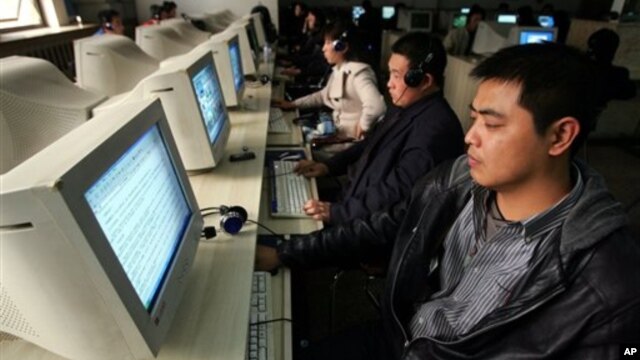
A recent report, according to which China is experiencing a steady growth in the number of Internet users who have access to "Facebook" and "Twitter" in Beijing is criticized.

Experts note that despite the growth of Internet literacy of its population, only a small proportion of the population of China has the tools needed to overcome the government's Internet censorship.

A GlobalWebIndex(London-based research Internet company) says that about 8 percent of Chinese Internet users have "Twitter", and 8 percent have "Facebook" - despite the fact that access to both social networks in this country is blocked.

But Michael Anti - a well known Chinese blogger, a columnist in the magazine and a defender of freedom of the Internet, said that the report greatly overestimates the prevalence of social media in the Western China.

Access to the Internet in China in the last decade has grown considerably. But the government retains control over servers located in the country, and prohibits content that is considered harmful.

Access to social networks with servers located abroad - such as "Twitter" and "Facebook" - can be obtained only by bypassing the filter system.

Virtual Private Network (VPN), for example, is a technology that provides a secure Internet communication. Companies outside China provide services based on it, which allow people to surf the Internet anonymously through spaces located overseas - thus avoiding blocking by the Chinese authorities.

Despite the fact that many people use these services to gain access to the information that the Chinese censors have blocked, more and more Chinese people bypass Internet filters for commercial purposes.

Research company International Data Corporation recently predicted China to double-digit growth in demand for products that provide security on the Internet - and almost 40 percent of this increase due to the VPN and firewall technologies.

Most companies of safety technology on the Internet, do not provide detailed information of the number of people using technology VPN - or how Chinese consumers use their products.

However, according to a study conducted in 2010, the Berkman Center for Internet and Society at Harvard University (USA), in countries where there is a set of internet filters, less than 3 percent of its users use the tools to overcome them.

John Russell, editor of the Internet-technologies online magazine Next Web, recognizes the existence of a tendency to spread security tools on the Internet, including virtual private networks.

However, he notes that the average Chinese Internet users still do not feel the need to use foreign social networks.

"In the absence of services such as" Twitter "or" Facebook ", local networks have gained strength and became very popular" - he said.

The "Sino-Veybo", the most popular Chinese counterpart, "Twitter", 300 million registered users. He became one of the most powerful platforms for posting comments, videos and pictures on the Internet.

Censorship on home sites in China, such as "Veybo" rather widespread - and often done by the companies that want to avoid the wrath of the authorities.

Russell says that this type of self-censorship brings more harm to Chinese Internet users.
Liked this post? Why not to Subscribe to Hide IP Soft by Email for FREE
